

No items found in your cart!
No items found in your cart!
 you definitely can not afford to miss this. READ HERE https://www.hub.goglowonline.com/view-post.php?post_id=105, Thanks for always taking out time to read through our blog posts @ Goglow Hub! We are Happy that you enjoy it!&image=<img src='https://www.hub.goglowonline.com/upload/1788110356Quantum_computing_the_hype_and_hopes_m0083-04.jpg'/>) |
|
|
|
|
|
|
|
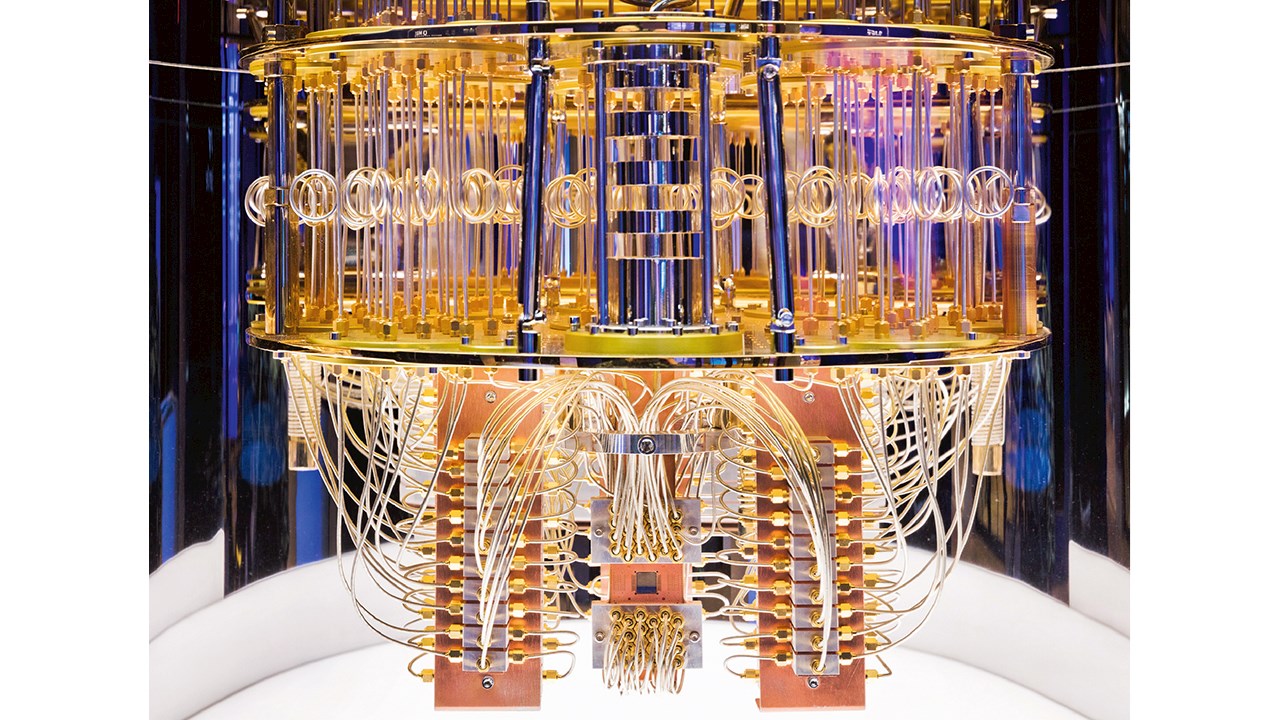
Imagine a computer that does not simply process information as 0s and 1s in the traditional way, but uses the strange laws of quantum physics to explore certain possibilities in ways that conventional computers cannot efficiently reproduce.
That is the promise of quantum computing.
Quantum computers are still an emerging technology, and they are not about to replace the laptops, smartphones, or servers we use every day. However, researchers and technology companies are investing heavily in them because, for certain extremely complex problems, quantum machines could eventually provide capabilities far beyond classical computing.
From discovering new medicines to optimizing global logistics, strengthening cybersecurity, improving financial modelling, and helping scientists understand nature at its deepest levels, quantum computing could become one of the most important technologies of the coming decades
To understand quantum computing, it helps to first understand how an ordinary computer works.
Traditional computers use bits as their basic unit of information. A bit can have one of two values:
0 or 1.
Everything your computer does—from displaying a website to processing a payment—is ultimately represented using combinations of these binary values.
Quantum computers use something different: quantum bits, or qubits.
A qubit can exist in a quantum state that combines aspects of both 0 and 1 until it is measured. This property is known as superposition.
Another important property is quantum entanglement, where the states of multiple qubits can become strongly correlated. Quantum algorithms can also exploit interference to increase the likelihood of useful answers while reducing the likelihood of incorrect ones.
Put simply:
Classical computing manipulates bits. Quantum computing manipulates quantum states.
But this does not mean a quantum computer simply tries every possible answer simultaneously and automatically chooses the correct one. Quantum algorithms have to be carefully designed so that quantum effects work together to produce useful results.
Think about trying to find the fastest route through a huge network of roads.
A traditional computer might examine possible routes using sophisticated algorithms and powerful processors.
A sufficiently capable quantum computer could potentially use quantum algorithms to tackle certain types of optimization and search problems in fundamentally different ways.
The important point is that quantum computers are not universally faster.
For everyday tasks such as sending an email, watching a video, editing a document, or browsing social media, a conventional computer remains far more practical.
Quantum computing becomes especially interesting when the problem involves enormous numbers of possible combinations, complex simulations, or mathematical structures that are difficult for classical computers to handle efficiently.
The world is generating enormous amounts of data and facing increasingly complicated problems.
Scientists want to simulate molecules.
Financial institutions want to optimize portfolios and manage risk.
Companies want to improve supply chains.
Governments want stronger cybersecurity.
Researchers want to understand complex physical and chemical systems.
Many of these problems involve enormous numbers of variables and possible outcomes.
Quantum computing could provide new ways of approaching some of them.
Its potential impact can be seen across several major industries.
One of the most exciting applications is drug discovery and pharmaceutical research.
Developing a new medicine can take years and require researchers to understand how molecules interact with one another.
Molecules operate according to the laws of quantum mechanics. Unfortunately, accurately simulating complex molecular systems on conventional computers can become extremely difficult as the systems grow.
Quantum computers could eventually help researchers model certain molecular and chemical interactions more naturally.
This could support:
Imagine researchers being able to explore thousands or millions of potential molecular configurations more efficiently and identify promising candidates for further laboratory testing.
Quantum computing would not eliminate clinical trials or replace doctors. Instead, it could become a powerful research tool that helps scientists narrow down possibilities before expensive physical experiments begin.
Faster computational research could contribute to the development of medicines and treatments that might otherwise take much longer to discover.
The financial industry is another area where quantum computing could have significant implications.
Financial systems involve complex mathematical problems involving risk, uncertainty, optimization, pricing, and enormous datasets.
Potential applications include:
Investment managers need to decide how to allocate capital across different assets while balancing potential returns and risk.
Quantum optimization techniques could eventually help solve certain complex portfolio allocation problems.
Financial institutions constantly model scenarios involving market movements, interest rates, currencies, commodities, and other variables.
Quantum algorithms could potentially improve particular forms of financial modelling and simulation.
Banks and financial institutions process enormous volumes of transactions.
Quantum technologies could eventually contribute to advanced analytical systems capable of identifying complex patterns associated with fraudulent activity.
Some financial instruments require sophisticated mathematical models.
Quantum computing could potentially accelerate specific computational tasks associated with financial modelling.
However, these applications remain an active area of research. Quantum computing is not yet a magic solution for financial institutions.
Imagine managing the movement of millions of products across thousands of locations.
A logistics company may need to determine:
These are examples of optimization problems.
As the number of variables increases, finding the best possible solution can become extremely difficult.
Quantum computing could potentially help address some of these optimization problems.
For example, a future logistics system could use quantum-enhanced algorithms to help determine more efficient:
Routes → schedules → warehouse allocations → vehicle assignments → delivery networks
The potential benefits could include:
This could be particularly valuable in a world where businesses increasingly operate complex international supply networks.
Perhaps the deepest impact of quantum computing could be on science itself.
Nature is fundamentally quantum mechanical.
Atoms, electrons, molecules and many other physical systems behave according to quantum principles.
Yet simulating these systems using classical computers can be extraordinarily difficult.
Quantum computers could eventually allow researchers to simulate certain quantum systems more directly.
This could contribute to research in areas such as:
For example, scientists could investigate new materials with unusual properties.
These materials could potentially contribute to:
The long-term possibility is remarkable: using one quantum system to help us understand another quantum system.
This may be one of the most urgent areas of quantum computing.
Much of today's digital security depends on mathematical problems that are extremely difficult for conventional computers to solve.
Some widely used public-key cryptographic systems rely on the difficulty of problems such as factoring very large numbers or solving related mathematical problems.
A sufficiently powerful, fault-tolerant quantum computer running an appropriate algorithm could potentially break some widely used public-key encryption schemes.
This is why cybersecurity researchers are already preparing for the post-quantum era.
Post-quantum cryptography involves developing cryptographic methods designed to remain secure against attacks from both conventional and future quantum computers.
This transition is important because sensitive information can have a long lifespan.
An attacker could potentially collect encrypted information today and attempt to decrypt it years later when more powerful technology becomes available. This concept is often described as "harvest now, decrypt later."
Organizations therefore need to think about quantum-resistant security before large-scale quantum computers become practical.
A cybersecurity threat
and
a cybersecurity opportunity.
It could threaten some existing cryptographic systems while simultaneously encouraging the development of stronger, quantum-resistant security technologies.
Quantum computers are not simply "faster computers."
The difference is more fundamental.
| Traditional Computer | Quantum Computer |
|---|---|
| Uses bits | Uses qubits |
| Bits represent 0 or 1 | Qubits can occupy quantum superpositions |
| Uses classical physics | Exploits quantum mechanical effects |
| Excellent for everyday computing | Designed for specialized computational problems |
| Mature and widely available | Emerging and technologically challenging |
| Relatively stable | Highly sensitive to environmental disturbances |
Quantum computers also face a major challenge known as quantum decoherence.
Qubits are extremely sensitive to their surroundings. Tiny disturbances can destroy quantum information.
Researchers therefore need sophisticated techniques to protect quantum states and correct errors.
This is one reason building large-scale, useful quantum computers is so difficult.
Quantum computing has enormous potential, but it is important not to exaggerate what the technology can currently do.
Modern quantum computers are still developing.
Researchers face major challenges involving:
Quantum computers are also not expected to replace classical computers.
The more realistic future is likely to involve hybrid computing.
A classical computer could handle conventional tasks while a quantum processor handles specific computational problems where quantum methods provide an advantage.
Think of it as adding a highly specialized tool to an existing computing ecosystem.
Quantum computing is not only a technology for Silicon Valley, Europe, or Asia.
Africa will also need people who understand emerging technologies and can determine how they can solve local problems.
Potential areas include:
Quantum-enabled drug discovery and molecular research could eventually contribute to healthcare innovation.
Optimization and modelling could potentially support agricultural supply chains, resource management, and other complex systems.
Nigeria and other African economies have rapidly growing digital financial ecosystems. Quantum-safe cybersecurity could become increasingly important as financial systems evolve.
African businesses face complex transportation and distribution challenges. Advanced optimization technologies could eventually support more efficient supply chains.
Universities and technology institutions will need to prepare students for emerging fields such as quantum information science, quantum software, and post-quantum cybersecurity.
African researchers can participate in global quantum research rather than simply becoming consumers of the technology.
This makes quantum computing an important topic for students, developers, researchers, cybersecurity professionals, entrepreneurs, and technology leaders.
You do not necessarily need to become a quantum physicist to participate in the quantum computing revolution.
The emerging ecosystem will require people with different skills.
Some important areas include:
For software developers, learning how quantum algorithms work could eventually create opportunities in quantum software development.
For cybersecurity professionals, understanding post-quantum cryptography could become increasingly valuable.
For data scientists and researchers, quantum computing may become another tool within a larger computational toolkit.
It is important to distinguish between potential and proven practical advantage.
Many proposed applications of quantum computing are still being researched.
Some problems may eventually benefit enormously from quantum machines.
Others may turn out to be better handled by classical computers or specialized hardware.
The future of quantum computing will therefore depend on breakthroughs in hardware, error correction, algorithms, software, and practical applications.
But that uncertainty does not make the technology unimportant.
The internet was once a developing technology whose future was difficult to predict. Smartphones, cloud computing, and artificial intelligence also went through periods of experimentation before becoming major parts of everyday life.
Quantum computing may follow a similarly long development path—or it may evolve in ways we do not yet anticipate.
Quantum computing represents a different way of thinking about computation.
Traditional computers transformed society by making information processing incredibly fast and accessible.
Quantum computers could potentially transform certain areas of computing by allowing us to approach specific classes of problems in fundamentally different ways.
Its impact could eventually reach:
Medicine — helping researchers explore molecules and develop new treatments.
Finance — supporting complex optimization, modelling, and risk analysis.
Logistics — improving routes, schedules, and supply-chain optimization.
Scientific research — helping scientists simulate complex quantum systems.
Cybersecurity — forcing the world to rethink how sensitive information is protected.
The technology is not yet ready to solve every problem, and many of its most ambitious promises remain under investigation.
But that is exactly why the world should be paying attention now.
Quantum computing may not change the world overnight.
Its development will likely involve years of experimentation, breakthroughs, setbacks, and new discoveries.
But the underlying idea is powerful: what if we could use the strange behaviour of nature itself to solve certain problems that conventional computers struggle with?
That question is driving a new generation of scientists, engineers, programmers, cybersecurity experts, and technology companies.
For students and technology professionals, the lesson is simple:
You do not have to wait for the quantum future to arrive before learning about it.
Understanding emerging technologies today creates the opportunity to participate in building tomorrow's technology.
At GOGLOW HUB, we believe technology education should not only teach people how to use today's tools—it should also help them understand the technologies that will shape the future.
The quantum era may still be developing. But the people who understand it early could be among those who help define what comes next.
Stay curious. Keep learning. The future of computing is only beginning.



.jpg)
.jpeg)

 Courses
 Graphics Design
 Web Development
 Mobile App Development
 System Application Development
 Computer Appreciation
 Architectural Design
 UI/UX Design
 Programming
 Software Development
 Computer Repairs
 Solar Panel Installation
 CCTV Installation
 Digital Photograpghy
 Digital Marketing
 Data Analytics
 Database Management
 Ethical Hacking
 Blockchain Development
 Jamb CBT Practice
 TOEFL Training
 IELTS Training
.jpeg)