

No items found in your cart!
No items found in your cart!
.jpeg)
 you definitely can not afford to miss this. READ HERE https://www.hub.goglowonline.com/view-post.php?post_id=106, Thanks for always taking out time to read through our blog posts @ Goglow Hub! We are Happy that you enjoy it!&image=<img src='https://www.hub.goglowonline.com/upload/1788342168images (26).jpeg'/>) |
|
|
|
|
|
|
|
From 5G networks and fibre optics to 6G research and satellite internet, the race for faster, smarter and more accessible connectivity is accelerating. But what will the next generation of the internet look like—and what could it mean for developing economies?
Imagine downloading an entire high-definition movie in seconds, attending a virtual university lecture with almost no delay, controlling machines thousands of kilometres away, or receiving medical assistance from a specialist who is not even in your country.
These possibilities depend on one thing: connectivity.
The internet has evolved from slow dial-up connections to broadband, 3G, 4G and now 5G. But the race is far from over. Researchers, telecommunications companies, governments and technology innovators around the world are already working on what comes next.
The future could involve a combination of 6G wireless networks, advanced fibre optics, low-Earth-orbit satellites, artificial intelligence, edge computing and intelligent network infrastructure.
For developing economies, this race is particularly important. Faster internet is not simply about watching videos more quickly. Reliable, affordable connectivity can influence education, healthcare, agriculture, financial services, entrepreneurship, employment and the competitiveness of entire economies.
So, what exactly comes after 5G?
Before looking at the future, it is important to understand how we got here.
Each generation of mobile technology has introduced major improvements:
5G is not simply "faster 4G." It was designed to support a much broader digital ecosystem, including smart cities, industrial automation, connected vehicles, Internet of Things (IoT) devices, augmented reality and other data-intensive applications.
But even as many countries continue expanding 5G, researchers are already designing the next generation.
That technology is known as 6G, or IMT-2030 in the terminology used by the International Telecommunication Union (ITU).
5G remains one of the most important developments in modern telecommunications.
Its major advantages include:
5G can deliver dramatically faster data rates than previous generations under suitable network conditions.
This makes activities such as high-definition streaming, cloud computing, large file transfers and immersive applications more practical.
Latency refers to the time it takes for data to travel between devices and servers.
Lower latency is extremely important for applications where milliseconds matter.
Examples include:
The future will contain billions of connected devices.
Smart meters, agricultural sensors, security systems, vehicles, medical equipment and industrial machines will increasingly communicate with one another.
5G was designed to support this growing ecosystem.
Modern 5G networks can use technologies such as network slicing to create virtual network environments optimized for different applications.
A hospital, for example, could require a different network performance profile from a consumer streaming video.
Despite its capabilities, 5G still has limitations.
Network performance can vary depending on spectrum, infrastructure, congestion, geography, device capability and network architecture.
More importantly, the amount of data generated by society continues to grow.
Artificial intelligence is increasing demand for computing and data transmission. Autonomous systems require extremely responsive networks. Virtual and augmented reality could require massive amounts of real-time data.
This creates a simple challenge:
If technology keeps becoming more powerful, the networks supporting it must evolve too.
That is where 6G enters the picture.
6G is still being researched and standardized, so it would be misleading to describe it as a finished commercial technology.
However, the global development process is already well underway.
In 2026, the ITU's work on IMT-2030 reached an important milestone, with technical performance requirements for 6G completed at the expert-group level. The framework includes concepts such as immersive communication, ubiquitous connectivity, AI-and-communication integration and integrated sensing and communication.
Commercial 6G networks are generally expected around the end of this decade or around 2030, although actual deployment will vary by country and technology ecosystem.
So what could make 6G different?
One of the most talked-about goals for 6G is dramatically higher data throughput.
The ITU's current IMT-2030 technical framework includes peak data-rate targets reaching 50–200 Gbps, depending on the scenario.
However, it is important to distinguish between theoretical or peak targets and the speeds ordinary users will experience.
The real-world experience will depend on spectrum, network design, device capabilities and environmental conditions.
One of the biggest differences between 5G and the emerging 6G vision may be the role of artificial intelligence.
Instead of networks simply transporting information, future networks could use AI to continuously optimize themselves.
AI could help networks:
This could make future networks more intelligent and responsive.
Another fascinating 6G concept is Integrated Sensing and Communication (ISAC).
Today, communication systems and sensing systems are often treated as separate technologies.
Future networks could potentially use radio signals not only to transmit information but also to detect objects, movement and changes in the environment.
Potential applications include:
Imagine a future factory where the wireless network simultaneously connects machines and helps monitor their movements.
That is the type of convergence researchers are exploring.
While researchers work on 6G, another transformation is already taking place above us.
Satellite internet is becoming an increasingly important part of the global connectivity ecosystem.
Traditional internet infrastructure often depends on terrestrial systems such as fibre cables, mobile towers and fixed broadband networks.
But what happens when you need to connect:
Building conventional terrestrial infrastructure in these areas can be expensive and difficult.
Satellites can help bridge some of these gaps.
One of the major developments in satellite internet is the growth of Low-Earth-Orbit (LEO) satellite constellations.
Because these satellites orbit much closer to Earth than traditional geostationary satellites, they can potentially offer lower latency.
Large constellations can work together to provide coverage across wide geographical areas.
The technology is particularly interesting for regions where terrestrial infrastructure is difficult or expensive to deploy.
The ITU has highlighted the growing convergence between satellite and terrestrial networks, including direct-to-device services that could eventually connect ordinary mobile devices through satellite systems.
This could become an important component of future 5G and 6G ecosystems.
When people talk about "faster internet," they often focus on wireless networks.
But there is another technology quietly carrying enormous amounts of the world's data:
Fibre optics.
Fibre-optic cables transmit information using pulses of light through extremely thin strands of glass or other transparent material.
They form the backbone of much of the global internet.
Undersea fibre-optic cables connect continents.
Data centres use fibre.
Telecommunications operators use fibre.
Internet service providers depend heavily on fibre infrastructure.
And mobile networks themselves depend on fibre to connect towers and network infrastructure to the wider internet.
This means the future of wireless connectivity is also closely connected to the future of optical networks.
The ITU's 2026 ION-2030 framework specifically addresses how optical networks need to evolve to support AI, data centres, broadband access, home networking and future 6G systems.
These technologies should not necessarily be viewed as competitors.
They solve different connectivity problems.
| Technology | Major Strength | Typical Role |
|---|---|---|
| Fibre Optics | Extremely high capacity and reliability | Internet backbone, homes, businesses, data centres |
| 5G | High-speed wireless connectivity | Smartphones, IoT, businesses, smart cities |
| Satellite Internet | Wide geographical coverage | Remote areas, mobility and hard-to-reach locations |
| 6G | Future intelligent, ultra-high-performance connectivity | Advanced AI, sensing, immersive applications and ubiquitous connectivity |
The future internet will likely be a hybrid ecosystem where these technologies work together.
A smartphone might communicate with a 6G terrestrial network in a city, fibre might carry the traffic between data centres, and satellites might provide connectivity when the user moves beyond terrestrial coverage.
The most important question is not:
"How many gigabits per second can we achieve?"
The more important question is:
"What can people and economies do with that connectivity?"
For developing countries, reliable broadband can become a foundation for economic transformation.
The World Bank describes reliable and affordable internet as a driver of economic growth and access to essential services. Its recent work also highlights the role of digital infrastructure in employment, commerce, public services and AI-driven innovation.
Let's look at some of the areas that could benefit.
High-speed internet can dramatically expand access to education.
A student in a rural community could attend virtual classes taught by instructors in another city or country.
Schools could access:
This could help reduce geographical barriers to quality education.
For countries with shortages of teachers or specialized instructors, connectivity can be particularly valuable.
Connectivity can also transform healthcare delivery.
Telemedicine already allows patients to communicate with medical professionals remotely.
As networks improve, more advanced applications could become possible, including:
For communities far from major hospitals, connectivity could literally become a bridge to healthcare.
Agriculture remains critical to many developing economies.
Faster and more reliable connectivity could accelerate the adoption of smart agriculture.
Farmers could use connected sensors to monitor:
AI systems could then analyse this information and help farmers make better decisions.
GSMA research has highlighted the potential of low-band 5G and IoT applications for agriculture in Sub-Saharan Africa, particularly because wider-area connectivity can support smart farming.
Faster internet lowers barriers for entrepreneurs.
A small business can sell products beyond its local community through an online marketplace.
A graphic designer can work for international clients.
A software developer can build products for customers anywhere in the world.
A digital marketer can manage campaigns for companies across multiple countries.
A content creator can build a global audience.
This is particularly important because the modern economy increasingly rewards skills rather than geographical location.
With adequate connectivity, a talented young person in Owerri, Lagos, Nairobi or Kigali can potentially compete for digital opportunities in markets thousands of kilometres away.
The rise of remote work has demonstrated that many jobs do not require employees to be physically present in the same location as their employers.
Better connectivity can make remote work more practical for developing economies.
This can create opportunities in:
For young populations with strong digital skills, connectivity can become an economic asset.
Africa has already demonstrated how technology can transform financial services.
Mobile money is one of the most prominent examples.
As connectivity improves, digital financial services can become even more sophisticated.
Potential developments include:
Better connectivity can help bring financial services to communities traditionally underserved by conventional banking infrastructure.
Future cities will increasingly depend on connected infrastructure.
Traffic lights could communicate with vehicles.
Public transport systems could monitor passenger demand.
Waste management systems could track collection needs.
Utility companies could monitor electricity and water networks.
Emergency services could receive real-time information.
All of these applications require reliable connectivity.
The result could be cities that are more efficient, responsive and sustainable.
The conversation about faster internet must also acknowledge an important reality:
Speed is not the same thing as access.
A country can have advanced 5G networks while millions of people remain offline.
According to GSMA's 2026 Africa report, mobile technologies and services generated about $240 billion in economic value across Africa in 2025, equivalent to 7.8% of regional GDP. Yet almost one billion people in Africa were still not using mobile internet, highlighting the enormous usage gap.
The World Bank similarly reports that billions of people globally remain offline and that internet access remains deeply unequal between high-income and low-income economies.
This means the next stage of the internet race should not only focus on achieving higher speeds.
It should focus on achieving affordable, meaningful and universal connectivity.
Developing economies face at least three major connectivity challenges.
Some communities simply do not have network infrastructure.
They may be too remote or too expensive to serve using traditional infrastructure.
Satellite technology, fibre expansion and innovative wireless technologies can help.
A network can exist without people being able to afford:
Connectivity must therefore become economically accessible.
Even when people have internet access, they need digital skills to benefit from it.
This is why digital literacy and technology education are just as important as infrastructure.
GSMA's recent African data emphasizes that affordability, device access and digital skills remain major barriers to closing the usage gap.
It probably won't be one single technology.
Instead, imagine a world where multiple technologies work together.
Fibre provides ultra-fast broadband.
5G or 6G provides high-performance wireless connectivity.
Satellite internet provides coverage where terrestrial infrastructure is difficult.
Advanced optical networks move enormous quantities of information.
AI dynamically manages traffic and resources.
Computing happens closer to users to reduce latency.
Sensors, smartphones, vehicles and machines communicate continuously.
The result could be an internet that is not simply faster, but more intelligent, resilient, pervasive and responsive.
Developing economies should not think of faster internet simply as a consumer technology.
It should be viewed as economic infrastructure.
Roads connect physical markets.
Electricity powers businesses.
Ports connect countries to global trade.
And digital networks connect economies to the global knowledge and information system.
Countries that invest strategically in broadband, data centres, fibre infrastructure, spectrum, digital skills and technology education can position themselves to participate more strongly in the digital economy.
The World Bank notes that broadband can support jobs, essential services, ICT development and smart infrastructure, while its 2026 work emphasizes digital infrastructure as a foundation for economic growth and employment.
Technology infrastructure alone will not transform an economy.
People must know how to use it.
That is where digital skills become critical.
The next generation of professionals will increasingly need knowledge in areas such as:
The faster the digital infrastructure becomes, the greater the demand for people capable of building, securing and using it.
This creates an enormous opportunity for young Africans.
The answer is not simply 6G.
The future of connectivity is bigger than a new generation of mobile networks.
It is a convergence of:
5G + 6G + Fibre + Satellites + AI + Edge Computing + IoT + Cloud Infrastructure.
6G could bring intelligent and highly responsive wireless networks.
Fibre will continue carrying enormous volumes of data.
Satellite systems can extend connectivity to hard-to-reach locations.
AI can make networks smarter.
Edge computing can bring processing closer to users.
And connected devices can turn entire environments into intelligent systems.
The global race is therefore not merely about who can deliver the fastest download speed.
It is about who can build the most capable, accessible and useful digital infrastructure—and who can equip their people to take advantage of it.
The history of the internet has always been a story of increasing speed, capacity and accessibility.
From dial-up connections to broadband.
From 3G to 4G.
From 4G to 5G.
And now from 5G toward a future shaped by 6G, satellites, fibre, AI and intelligent networks.
The biggest opportunity is not simply downloading a movie a few seconds faster.
It is what happens when a farmer can access real-time agricultural intelligence, a student can attend a world-class virtual classroom, a doctor can consult with a specialist remotely, an entrepreneur can sell internationally, and a young professional can work for a global company without leaving their community.
That is the real promise of faster internet.
For developing economies, the question should not be whether the world is moving toward 6G.
It should be:
Are we building the infrastructure, skills and digital ecosystems necessary to benefit when it arrives?
The future of connectivity is already being designed.
And the countries, businesses and individuals that prepare early could have a significant advantage in the digital economy of the next decade.
At GOGLOW HUB, we believe that technology education is one of the most important parts of preparing for this future.
The world will need professionals who don't just use technology but understand how it works, build with it, secure it and create opportunities from it.
The next digital revolution will require more than faster networks.
It will require faster learning.
Stay curious. Keep learning. Keep building.
The future belongs to those who are ready for it.
GOGLOW HUB is a technology and digital skills training platform focused on equipping individuals with practical skills for today's digital economy.
From web development and data analysis to cybersecurity, graphics, digital marketing and other technology-focused skills, GOGLOW HUB is committed to helping learners become more confident and capable participants in the digital future.


.jpeg)


 Courses
 Graphics Design
 Web Development
 Mobile App Development
 System Application Development
 Computer Appreciation
 Architectural Design
 UI/UX Design
 Programming
 Software Development
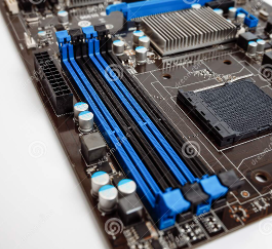 Computer Repairs
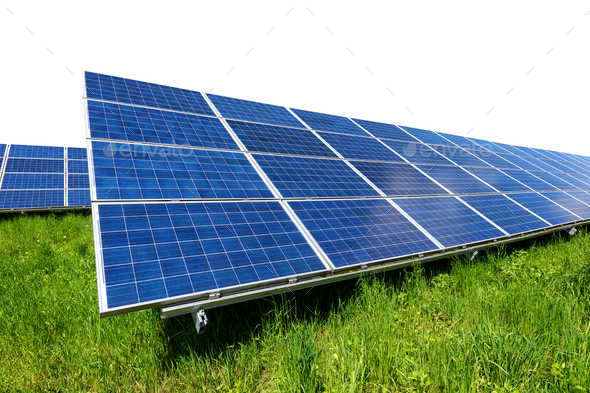 Solar Panel Installation
 CCTV Installation
 Digital Photograpghy
 Digital Marketing
 Data Analytics
 Database Management
 Ethical Hacking
 Blockchain Development
 Jamb CBT Practice
 TOEFL Training
 IELTS Training